How to Reconstitute a Philippine Land Title
How to Reconstitute a Philippine Land Title
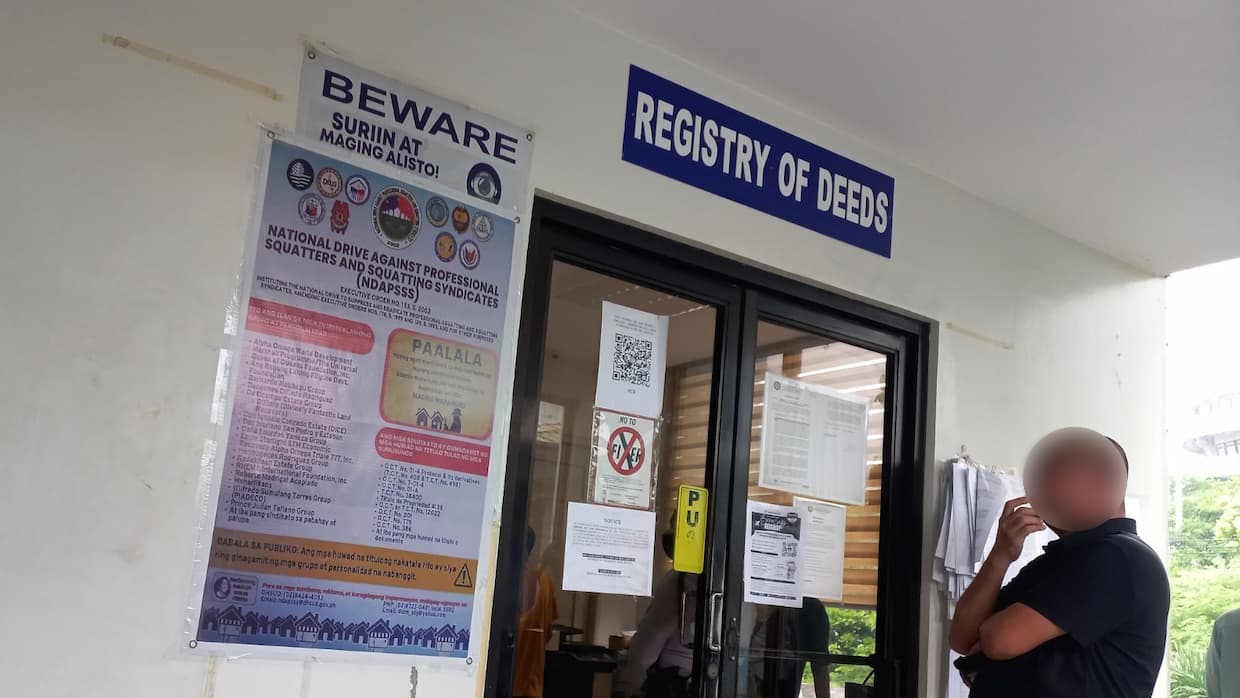

A common question I get asked is: What is the process of Reconstitution of Title in the Philippines, or even, what exactly is Reconstitution?
In the context of Philippine property law, Reconstitution means the replacement of the lost land title that is held by the Registry of Deeds either through an Administrative Reconstitution of Title or through court.
Most people only find out that Reconstitution of Title is needed when they are required by a buyer or bank to verify their Land Title at the Registry of Deeds.
The Title can only be verified if the Registry of Deeds has its own copy of your Land Title.
If it does not, then this is a major “Oh No!” moment; you will need to go through either a Judicial or Administrative Reconstitution of Title.
(This is the case even if you have your original Owner’s Title because you need both your original Owner’s Land Title and the Registry of Deed’s copy to prove ownership.)
In this article, I explain:
- Administrative Reconstitution of Title allows you to replace your missing land title without going to court.
- Judicial Reconstitution of Title requires that you go to court to replace your missing land title. Most cases fall under this category.
If you have any questions which are not answered in this article, please contact us.
If you are searching for information about how to replace a lost Owner’s Title, read this post for detailed information on how to petition for issuance of lost owner’s copy of land title

Send us an email with the details for
personalized recommendations or schedule a consulation if needed.
When you first acquire land in the Philippines, the Registry of Deeds (RD) will issue you an Owner’s Title or Land Title.
The Registry of Deeds will have another copy that they keep, that is the original copy of your Land Title.
Together, these two documents confirm your ownership of that land.

Philippine Reconstitution of Title is needed because both the owner’s title and the Registry of Deed’s title are proof of your ownership of the property.
If one of these land titles is lost or destroyed, it may cause problems, such as someone challenging your possession or ownership of the land and property.
If the Registry of Deed’s copy of your land title is lost or destroyed, unscrupulous people may be able to sell your property due to the absence of a title at the Registry of Deed’s.
There are many cases of this in the Philippines after a Registry of Deed’s office has been damaged.
For example, the Quezon City Registry of Deed’s burned down in 1998, and court cases brought by rightful land owners continue to this day.
If the Registry of Deed’s copy of your title is destroyed, buyers, banks, and other investors may no longer push through with a sale or investment.
And if you are planning to sell or develop your property, having your Owner’s Title is not enough.
You will need both documents as references.

Buyers often verify your ownership of the property by looking at the Title lodged at the Registry of Deeds; thus, a Philippine Reconstitution of Title case is needed when the Title at the RD is missing.
There are also a lot of fake Land Titles in the Philippines.
Serious buyers will often go to the Registry of Deeds with your photocopied Owner’s Title to verify your ownership through the Registry’s copy due to how many fake titles there are.
This is called due diligence, and it checks if the owner is really the owner of the property.
If the Registry of Deed’s copy of the Land Title cannot be found, the buyers may back off.
As such, the need for replacing the lost RD Title through the Philippine Reconstitution of Title case is necessary.
Reminder: If you have lost your copy of your Owner’s Title but the Registry of Deed’s copy is intact, the process you need to go through is called Reissuance. I go through the detailed step-by-step process for this in my article, What to Do When You’ve Lost Your Land Title.
Reconstitution is the process through which lost land titles registered with the Registry of Deeds are replaced. This can happen through two main methods. First, I’ll provide an overview and then go through each in detail and in separate sections.
• Administrative Reconstitution of Title: This approach enables property owners to obtain replacements for their lost titles without needing to go to court, provided they meet specific conditions.
• Judicial Reconstitution of Title: This method involves initiating a court case when administrative routes are not feasible.
Key Steps in Administrative Reconstitution
1. Eligibility Check: Verify that your Registry of Deeds has permitted administrative reconstitution due to widespread title loss.
2. Document Preparation: Assemble necessary documents, including your Owner’s Duplicate Certificate of Title.
3. Submission Process: Submit your petition to the relevant Registry of Deeds and await confirmation of your submission.
Key Steps in Judicial Reconstitution
1. Filing a Petition: Start a court case by submitting a petition to the Regional Trial Court that has jurisdiction over your property.
2. Witness Testimony: Prepare a witness who can testify regarding your ownership during the court hearings.
3. Final Decision and Registration: After a judgment is rendered, ensure the decision is registered with the Registry of Deeds to secure your new title.
In limited situations, you can Reconstitute the Registry of Deeds (RD)’s Title of your copy yourself.
This is called Administrative Reconstitution of Title.
Administrative Reconstitution of Title can only go ahead if:
- The Registry of Deeds where the land was located announces that Administrative Reconstitution is possible.
This is usually when the Registry has suffered a natural catastrophe such as a fire or a flood.
In cases where more than 10% of the Titles and at least 500 Land Titles have been destroyed, they may announce that Administrative Reconstitution of Title is possible for the affected titles.
Please note: We do not maintain listings of which Registry of Deeds permits Administrative Reconstitution of Title as these change all the time. You will have to call the Registry of Deeds where the land is located to confirm. You can check here for contact details of Registry of Deeds Offices
- You must also have your Owners Land Title or your co-owner’s, mortgagee’s, or lessee’s duplicate of the Certificate of Land Title for Administrative Reconstitution of Title to be possible.
Administrative Reconstitution of Title is allowed only in very specific circumstances!
So, just to reiterate,
You can do Administrative Reconstitution of Title if you have your Owners or Co-owner’s, mortgagee’s, or Lessee’s duplicate of the Certificate of Title and if the Registry of Deeds where the land is located announces that Administrative Reconstitution of Title is allowed.
You would submit your petition for Administrative Reconstitution of Title at the Registry of Deeds where the land is located.
If the Registry of Deeds doesn’t announce you can do Administrative Reconstitution of Title or you don’t have one of the documents, then you are going to have to go through court instead.
As a basic rule, always check if Administrative Reconstitution of Title is possible. It is cheaper than court, so avail of it if you can.
In most cases, Judicial Reconstitution of Title is needed when the Registry of Deeds copy of your Title has been lost.
Judicial Reconstitution is a court case. [Sec 110, PD 1529]
Aside from the scenario’s specifically mentioned above in the Administrative Reconstitution of Title section, there is really no way to replace a lost RD’s copy of title otherwise.
Now, there are numerous ‘fixers’ and ‘middle men” who will claim that they can do this for you quickly.
But I’ve seen enough cases to be extremely wary. The clients can be taken advantage of and the “quick fix” often doesn’t actually fix the problem.

Most people will need to go through a court process to replace the lost Registry of Deeds Land Title since it’s fairly rare for Administrative Reconstitution of Title to be available.
I will always advocate that people should do it the correct way.
It is the only way to avoid the very real problems you will face because of shady, backroom deals. “Fixers” and “Middle Men” can lose you a lot of money regularly.
They will cost you a lot of time, too!
Quick Facts
Case: Reconstitution of Title in the Philippines
Timeline: 1 – 1 ½ years, depending on the court’s schedule
Cost: Court Fees, Registry of Deeds Fees, Lawyer’s Fees
Testimony: At least once, or more as needed by the court
Documents: Owner’s Duplicate Certificate of Title or other documents enumerated below, Other documents required by the court
Step 1: File a Petition for Philippine Reconstitution of Title with the Regional Trial Court where the land is located.
Lost or destroyed titles can be replaced at the cost of time and resources as most titles can only be replaced through court.
(Administrative Reconstitution of title is limited to a very, very small number of cases. Most lost Registry of Deed titles can only be replaced with a court case. Because of court, replacing a lost RD title can be costly.)

You must file the Petition for Philippine Reconstitution of Title with the Regional Trial Court where the land is situated.
You and your lawyer will create a Petition requesting the court to order the replacement of the Registry of Deeds copy.
Your lawyer will first need to assess the evidence that you are the owner of the land and allow him to go to court:
To do that, he will first ask you for any of the following documents:

Your lawyer must present the proper documents to show ownership to strengthen your claim.
- Your Owner’s Duplicate Certificate of Title
- Your co-owner’s, mortgagee’s or lessee’s Duplicate Certificate
- Certified copy of the Certificate previously issued by the Registry of Deeds
- Authenticated copy of the Decree of Registration or Patent that was the basis of the Certificate of Title, if the Reconstitution is for the original Certificate of Title OR Deed of Transfer or other document or an Authenticated Copy with the property’s description covered by the Transfer Certificate of Title and filed at the Registry of Deeds, if the Reconstitution is for a Transfer Certificate of Title
- Deed or an Authenticated copy of mortgage, lease or encumbrance with the property’s description and filed at the Registry of Deeds
- A special power of attorney authorizing him to act on your behalf.
- Any other document which is sufficient in the judgement of the court
As with any court case, you need to have strong evidence for the case to succeed.
The specific documents cited above are documents acknowledged by the court as valid sources of evidence for a case for Reconstitution of Title in the Philippines.
Your lawyer will have to carefully go over your case if the Owner’s copy of title or the other major documentary sources are missing.
When your attorney has gone over your documents, he will create a Petition to be filed at the court.
There will be Filing Fees, Publication Fees and other document-related fees, such as Postal or Notarial Fees.
In addition, a Land Survey may have to be commissioned for Land Registration Authority (LRA) Approval if documentary evidence isn’t strong.

A Philippine Reconstitution of Title court case will always need testimony from a witness to support the case.
You will be required to have a witness attend Court.
The witness will testify as to the ownership of the land and how they discovered that the land title was missing.
Before the witness takes the stand in court, your lawyer will have done the following:
- Coordinated with the Official Gazette to publish a Notice which must be completed 30 days before the court’s First Hearing.
- Complied with Notice Requirements
- Worked with you to create a Land Survey, if needed
- Appeared at court to show compliance to legal requirements
- Complied with other Orders of the court
All of the above will take some time, so the witness may not be called to testify until several months after the actual filing of the Petition for the Philippine Reconstitution of Title case.
As part of the preparation for that, your lawyer will interview the witness and file a submission to the court called the “Judicial Affidavit”.
The Judicial Affidavit covers all the facts the Witness presented.
Fees related to the Petition, the court appearance and other Submissions will also need to be paid.
Unless there is opposition, your case should be headed for its conclusion.
(A hopefully happy ending where you receive a Reconstituted Philippine Land Title.)
Your lawyer is busy now putting together the final submission to the court and dealing with any other legal requirements that court might have ordered.

Hopefully, your case for Reconstitution of Title in the Philippines will conclude with a successful decision.
The court will release its decision but be prepared for a bit of a wait, as it can take months.
The court case is concluded at this point but remember that you still have to register this with the Registry of Deeds (RD) where the land is located.
Do not skip registering the decision with the Registry of Deeds!
It is important as the Registry of Deeds will only create a new title after the court’s successful decision has been registered with them. It is not an automatic process.
While it is a time-consuming process to register the decision with the Registry of Deeds, it is a very, very necessary one.
And yes, you will have to pay Registry of Deeds Fees as well.
This article has been written from your point of view.
It covers Administrative Reconstitution of Title requirements with an overview of the documents and process.
It also covers the Judicial Reconstitution of Title requirements, what you need to prepare, the steps you need to be aware of, and how the case will look from your point of view.

You will need to go through the three steps of Reconstitution of Title in the Philippines if the copy of your Title in the Registry of Deeds has been lost/destroyed.
In general, the court process looks like this:
- File and submit a Petition for Philippine Reconstitution of Title at court
- Present a witness at court
- Wait for the court decision and register the reconstituted Title at the Registry of Deeds
Your lawyer will take care of all the other requirements, as he will attend all the other hearings, address extra court orders, and generally follow up and coordinate with the court on several other things.
(FYI, the process from the lawyer’s side is more complicated than what I’ve presented in this article. There are a lot of court rules that he needs to comply with to make sure your case goes as smoothly as possible. Always hire good counsel, it’s better than a case dragging on forever or a case being denied).

Avoid Fixers and Middlemen!
A few things to remember–
Always check to see if you are eligible for Administrative Reconstitution of Title.
Administrative Reconstitution of Title is cheaper (but it is still a lot of work) and so, it may be best to see if this path is open to you.
Second, take care to go through the correct process.
There are Fixers and Middle Men who will promise “shortcuts” and “easy fixes”.
The aftermath of these “easy fixes” can be court cases against you, lost money and lost time.
If done the right way, you minimize risk that your title can be challenged.
A successful court case for Reconstitution in the Philippines will allow you to easily sell or have investors look at the land to maximize its potential.
Atty. Francesco C. Britanico, FCB Law Office
Lawyers In the Philippines
Other Useful articles about Philippine Land Titles and Inheriting Land: