How to Apostille Philippines Documents (Birth Certificates, Marriage Certs, etc.)
How to Apostille Philippines Documents (Birth Certificates, Marriage Certs, etc.)
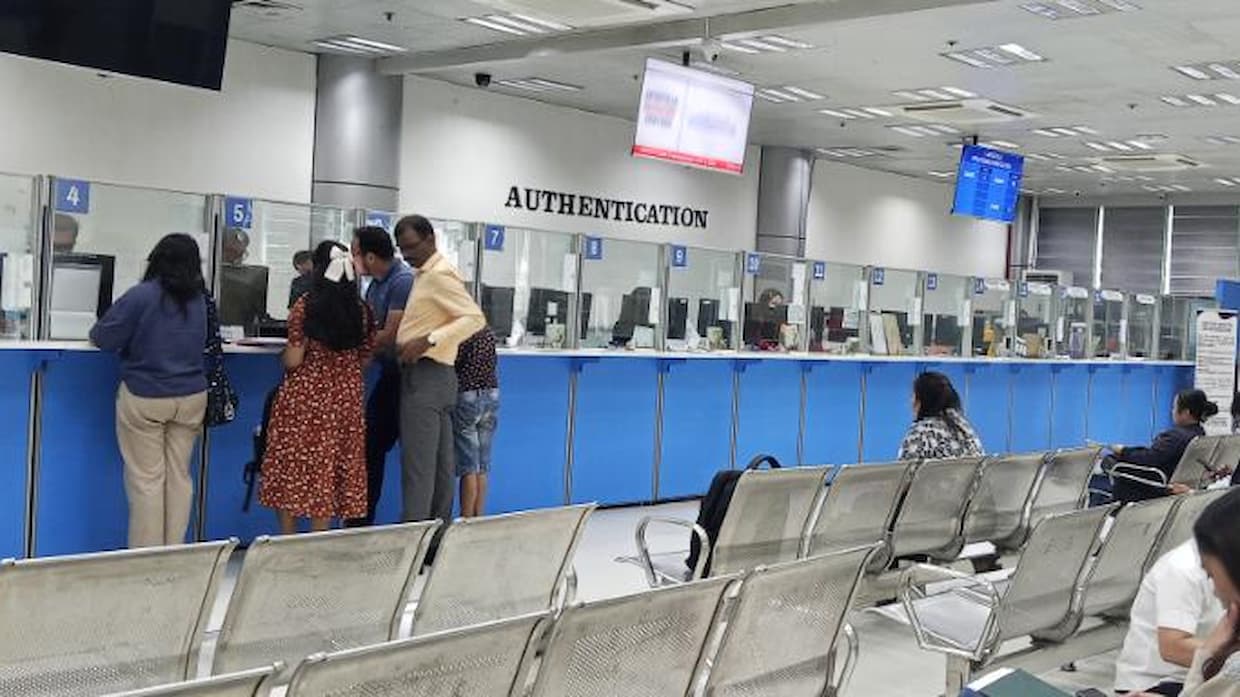

How to Apostille Philippine Documents covers everything you need to know about an Apostille cost, timeline, process and Apostille Requirements.
An Apostille authenticates foreign documents so that it can be used in other foreign Apostille countries.
You might need to Apostille your Diploma or Certificate of Enrollment if you are applying for a job abroad.
You might need to Apostille your Birth Certificate.
Or you might need to Apostille your Philippine Statistics Authority CENOMAR (Certificate of No Marriage Record) if you are getting married abroad.
In this article, I answer common questions such as:
• How to Apostille a document
• What are the Apostille Requirements
• How much is Apostille in Philippines
• Where to get an Apostille in the Philippines
If you have any questions or need help, after reading this article you can contact us.

Send us an email with the details for
personalized recommendations or schedule a consulation if needed.
Basically, an Apostille says that a document is authentic.

The DFA has strict requirements to authenticate the signature of the Issuing Officer if it’s a government document.
An Apostille authenticates a document by verifying that the person or institution who issued a document is known to the government of another country, that the person or institution has the power to issue that document and that the document is authentic or genuine.
In today’s world it is very easy fake documents.
To make sure that a document is real, foreign governments and institutions require it be Apostilled.
You are most likely to be asked to Apostille Birth Certificate, CENOMARs, Diplomas and Affidavits among many others.
The difference between an Apostille vs Red-Ribbon is how the documents are authenticated and the appearance of the authentication.
The Red Ribbon was the previous way of authenticating a document.
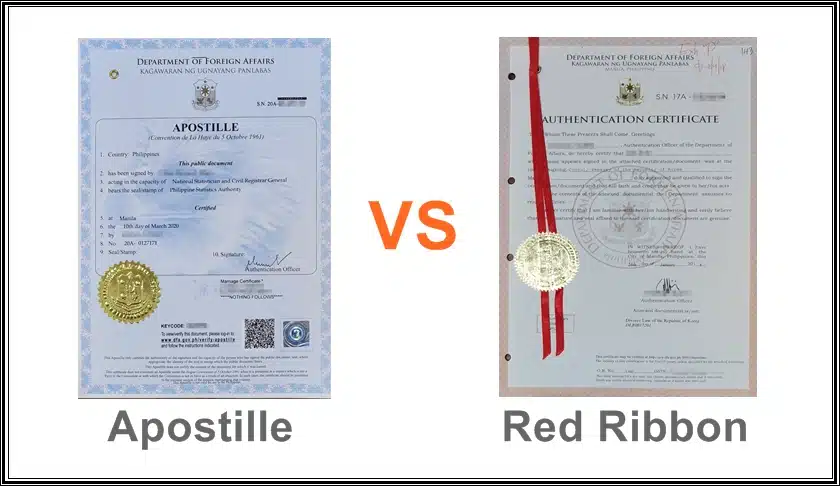
Apostille makes authenticating documents simpler.
Apostille replaced the Red Ribbon requirement when the Philippines joined the Hague Convention on Apostille.
When the Philippines first joined the Hague Convention on Apostille, people were allowed to continue to use their Red-Ribboned documents for a brief period. Now however, an Apostille is required if the destination country is also a Hague Convention member.
On the 14th May 2019 the Philippine Department of Foreign Affairs also stopped issuing Authentication Certificates for documents, switching to Apostille instead.
An Apostille has a gold seal, a QR code, a number and the signature of the Authenticating Officer.
A Red Ribbon document has two red ribbons on the side with a gold seal down below.
A Red-Ribboned document typically took longer to accomplish than an Apostille does. The process included going to the foreign country’s consulate in the Philippines for them to certify the document as well.
An Apostille is a bit simpler (whew!) which is a relief if you are going to do it yourself. The Apostille Requirements are covered further on in this article
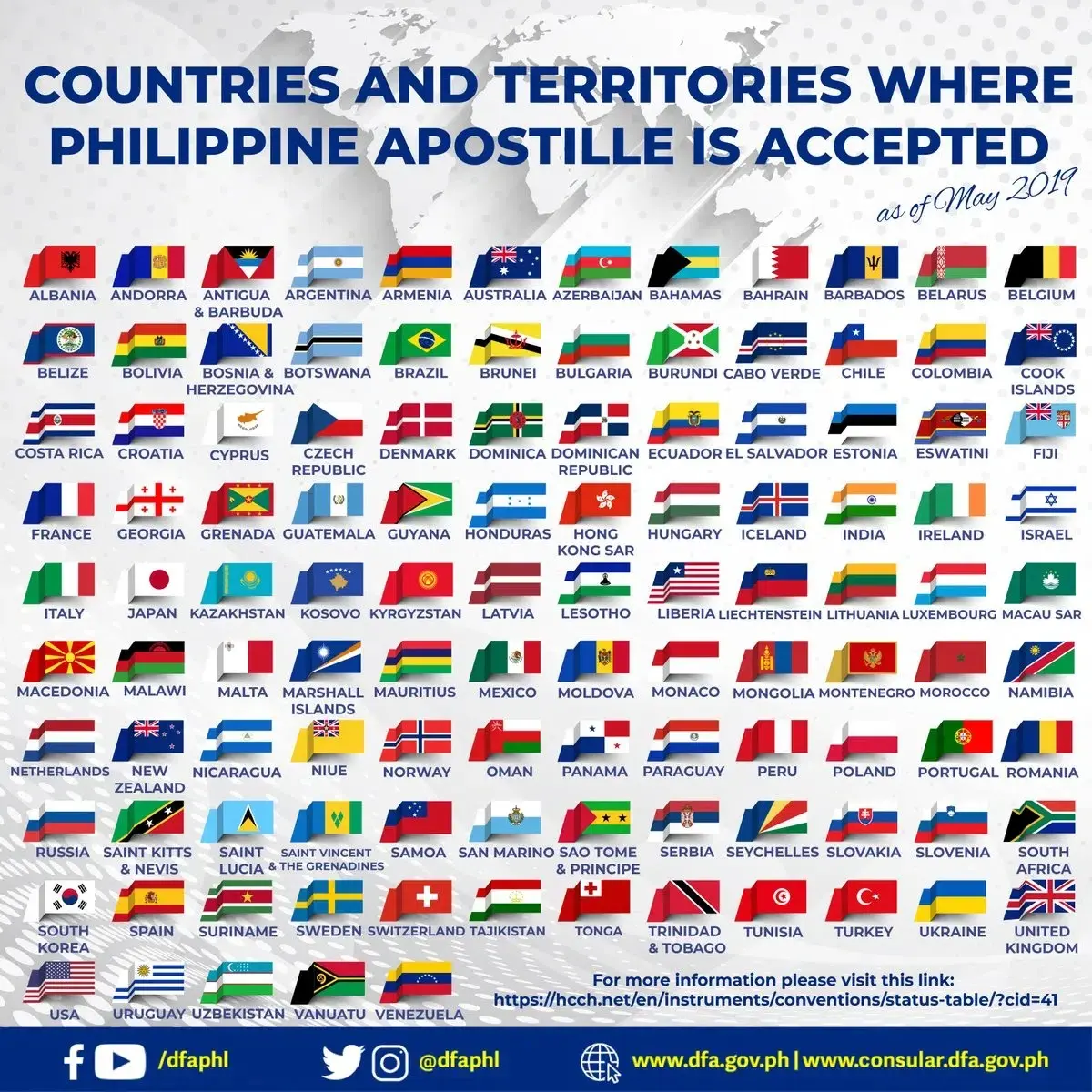
Most countries who are part of the Hague Convention accept an Apostille from the Philippines with the exception of:
1. Greece
2. Austria
3. Germany
4. Finland
For the above countries – and any other countries which are not listed on the accepted countries list, you will have to go through the old Red Ribbon process.
The old Red Ribbon process starts by getting Certification from the relevant government agency or office and then getting Authentication by the Philippine Department of Foreign Affairs. After the Authentication by the Philippine Department of Foreign Affairs, you must then taking your documents to the foreign countries Embassy for Red-ribbon or “legalization”.
You can check below for all the countries where Philippine Apostilles are accepted.
An Apostille can be done at the Department of Foreign Affairs (DFA) and its satellite branches.
The DFA will only Apostille documents that are created in the Philippines.

Philippine Apostilled documents can be used abroad if the receiving country is also a member of the Hague Convention on Apostille
Examples of documents created in the Philippines would be PSA documents, contracts and educational documents from schools in the Philippines.
Documents created abroad will NOT be Apostilled at the Philippine Department of Foreign Affairs.
So, you will need to get your divorce papers Apostilled in the country where the divorce was issued if you need them for use in the Philippines such as in a Recognition of Foreign Divorce case.
The Philippine DFA will only able to authenticate a document issued or made in the Philippines.
The rule is that the country where the document was created is also the only place where the document can be Apostilled.
Below is a quick list of documents that will most likely need an Apostille. Commonly people are required to Apostille Birth Certificates, Marriage Certificates and Death Certificates.
Remember that an Apostille is the end of the process.
Before a document can be Apostilled, you might have to go through several steps first.

Different documents types have different Apostille Requirements, so check these first
1. Philippines Statistic Authority/National Statistic Office (PSA/NSO) documents such as Birth, Marriage, CENOMAR or Certificate of Singleness, Death Certificates
• Original documents are required
• New records should first be authenticated with the Philippines Statistic Authority (PSA)
2. Professional Regulation Commission (PRC) documents such as ID renewals, PRC Board Ratings, Certifications and Change of Status
• Certified True Copies from the Professional Regulation Commission
3. School documents such as Transcript of Records, Diplomas, Certificate of Enrollment, Honorable Dismissal, Transfer of Credentials, Course Descriptions. Certified True Copies Required as well as:
• Technical Education and Skills Development Authority (TESDA) CAV also needed if from a Tec Voc course
• Certificate of Higher Education (CHED) documents will require a Certification, Authentication and Verification (CAV) if document is from private university/college while state run colleges can provide their own CAV
• Department of Education DEPED Regional Office CAV also needed if from elementary or high school
4.Employment Certificates/Training, etc
• Notarized document with document attached
• Certificate of Authority for a Notarial Act (CANA) from the Regional Trial Court
5. Driver’s License – Certification from the Land Transportation Office (LTO)
6. Civil Aviation Authority of the Philippines – Certification from CAAP
7. National Bureau of Investigation (NBI) for use abroad – Original document with dry seal
8. Department of Social Welfare and Development (DSWD) or Philippine National Police (PNP) – Original document
9. Barangay Clearances – Mayor’s Clearance that has jurisdiction over the barangay
10. All documents issued by a government entity – Certified True Copy from the office that issued it.
11. Court Decisions – Certified True Copy from the court
12. Notarized documents – Certificate of Authority for a Notarial Act CANA from the Regional Trial Court
Each type of document has different supporting documents that should be submitted to the Department of Foreign Affairs (DFA) along with the document for Apostille, such as a CANA for contracts and CAVs for school documents.
The DFA will only Apostilles documents which have complete supporting documents and will turn you away if something is missing.
The DFA requires these supporting documents because it serves as added verification that the document is authentic.
Let me give you two examples:
Apostille Requirements: Birth Certificates
To Apostille Birth Certificate first order a Philippines Statistics Authority (PSA) Birth Certificate. Then go through the Apostille process at the Department of Foreign Affairs. You may need to go through other steps before the Apostille stage if the copy is from the Local Civil Registrar (LCR).
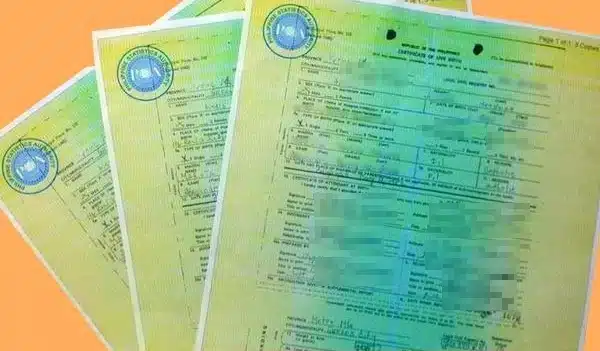
Philippine Statistics Authority documents can be quickly easily Apostilled
Apostille Requirements: Transcript of Records.
You will get a Certified True Copy of the Transcript of Records from a private school.
You will also need to get a Certificate, Authentication and Verification (CAV) from the DepEd.
This is basically a manual process where you line up at the DepEd to get the CAV.
Finally, you can get an Apostille at the Department of Foreign Affairs.
Different documents will have different supporting documents, which I’ve listed in the section before this one.
Check to make sure that you have all the supporting documents to meet the Apostille requirements before you go to the DFA, because they can reject you otherwise.
The DFA Apostille requirements are pretty straightforward.
The DFA will require IDs and a Special Power of Attorney if relevant, PLUS all the supporting documents I mentioned in the section that lists the documents eligible for Apostille.
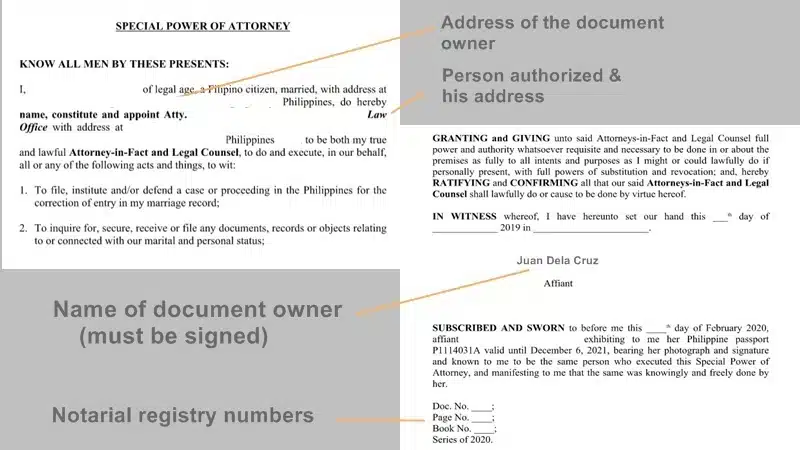
SPAs need to be specific and there are several requirements
Just to be clear though, here it is:
1. Special Power of Attorney (SPA) if you will be using an Authorized Representative.
• Make sure that the SPA has the name of the Authorized Representative and is specific that it includes Apostilling the document.
• The SPA should come from the parents if the document belongs to a minor.
2. Photocopy of the owner’s ID
Make sure that the owner’s ID has a signature and is from the list of IDs accepted
3. Photocopy and original of Authorized Representative’s ID.
Apostille fees are not expensive but when you add in the time and how manual the process is, then costs can increase.
The Apostille itself doesn’t cost too much but when you add in all the additional work required to coordinate with the DFA and get the complete supporting documents, the cost in time and effort is a lot.
Apostille fees are:
If you need it within a day, you will need to pay Php200.
If you can wait 3 days, you only need to pay Php100.
But always factor in that you need at least 2 days at the Department of Foreign Affairs and then all the work required to get the supporting documents.
As an example: Some colleges will charge a few hundred pesos to release a Transcript of Records and most will require you to physically go to the campus to get it. Then, you’ll still need to get a Certificate, Authentication and Verification from the CHED – and this again is a manual process with travel time and costs.
If you go yourself, remember that it’s really the fact that it takes time that makes it such a hassle. There aren’t many online options so make sure you also budget time to do this, and not just money.
You will most likely spend at least 2 days processing and following up at the DFA office you submitted the document to.
And don’t forget, if you will be asking someone to get the document Apostilled on your behalf, you need to factor in the time and cost of getting a Special Power of Attorney (SPA).
Usually people who ask someone else to get the document are abroad and cannot travel themselves. So they will also need to factor in the time and cost of a trip to the Philippine Embassy to get the SPA notarized.
The Department of Foreign Affairs (DFA) receives a lot of Apostille requests so the good news is the Apostille process is fairly streamlined. That is, IF you have got all the documents and met all the Apostille requirements!
You must make sure you have the right documents and the right requirements.
For example: You need to Apostille birth certificate, if the requirement is an original Philippines Statistics Authority (PSA) document, DO NOT submit a photocopy of that document. Even if that’s all you have.
You will need to get a new copy/Certified True Copy of the document in order to secure an Apostille Birth Certificate.
Otherwise, there are 2 main steps to getting an Apostille:
1. Go to the Department of Foreign Affairs and submit the Apostille request and pay for it.
2. Pick up the Apostilled document.
Remember, before you go, make sure that you have met all the requirements and have all the supporting documents.
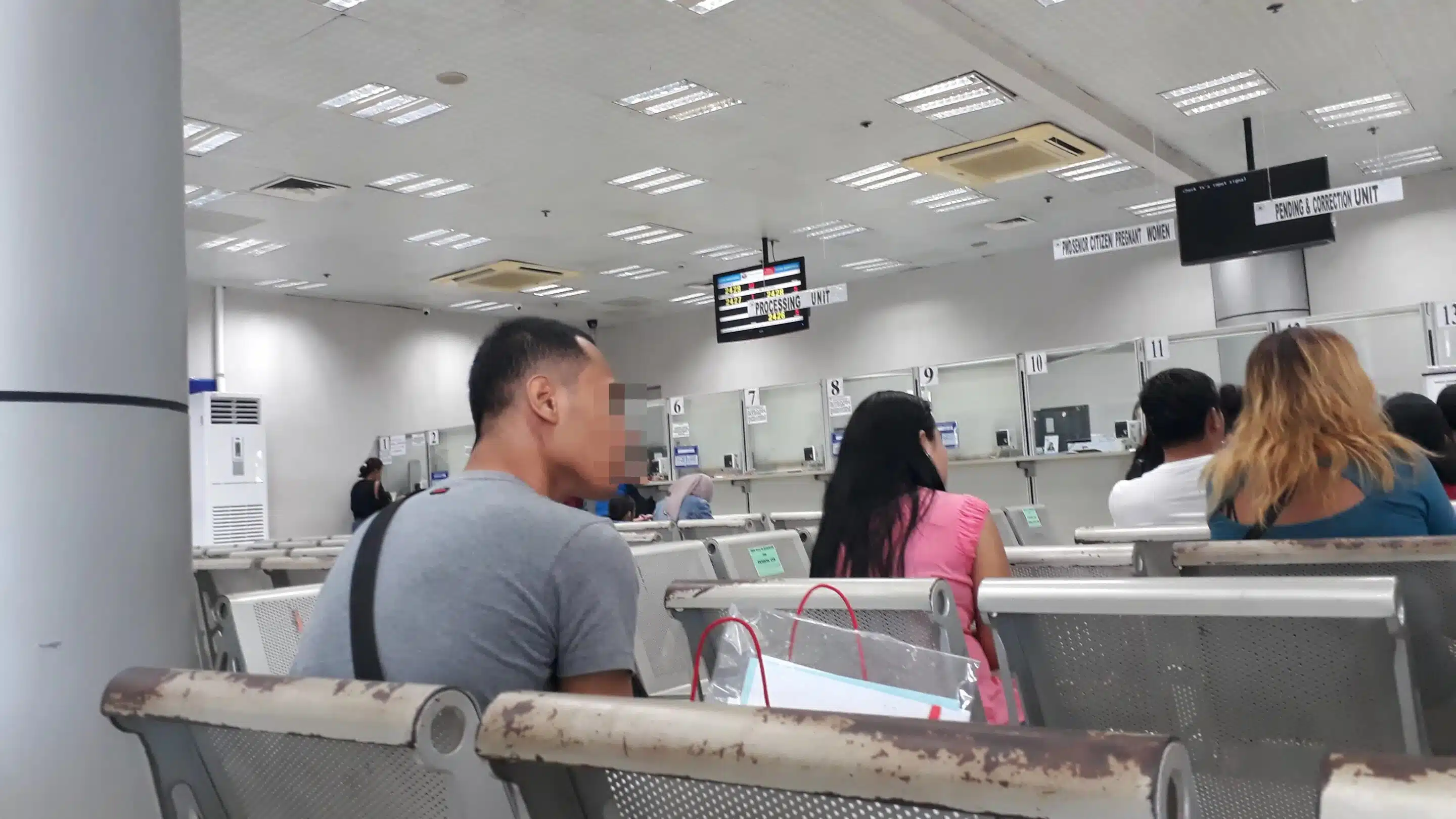
Get your appointment with the DFA authentication section by emailing them.
Step 1. Go to the Department of Foreign Affairs and submit the Apostille request and pay for it.
I usually go the DFA at Aseana so I’ll walk you through that process.
1. Get a queueing number from the Information Window.
2. Fill out the Authentication Application Form (I generally fill it out before I go just because I’m OC that way.)
3. Submit your documents to the Processing Window. You will need to submit the document itself and your ID and Special Power of Attorney (SPA) if you are an Authorized Representative.
4. Pay your fee at the cashier and keep your receipt somewhere safe. You will need this receipt for Step 2.
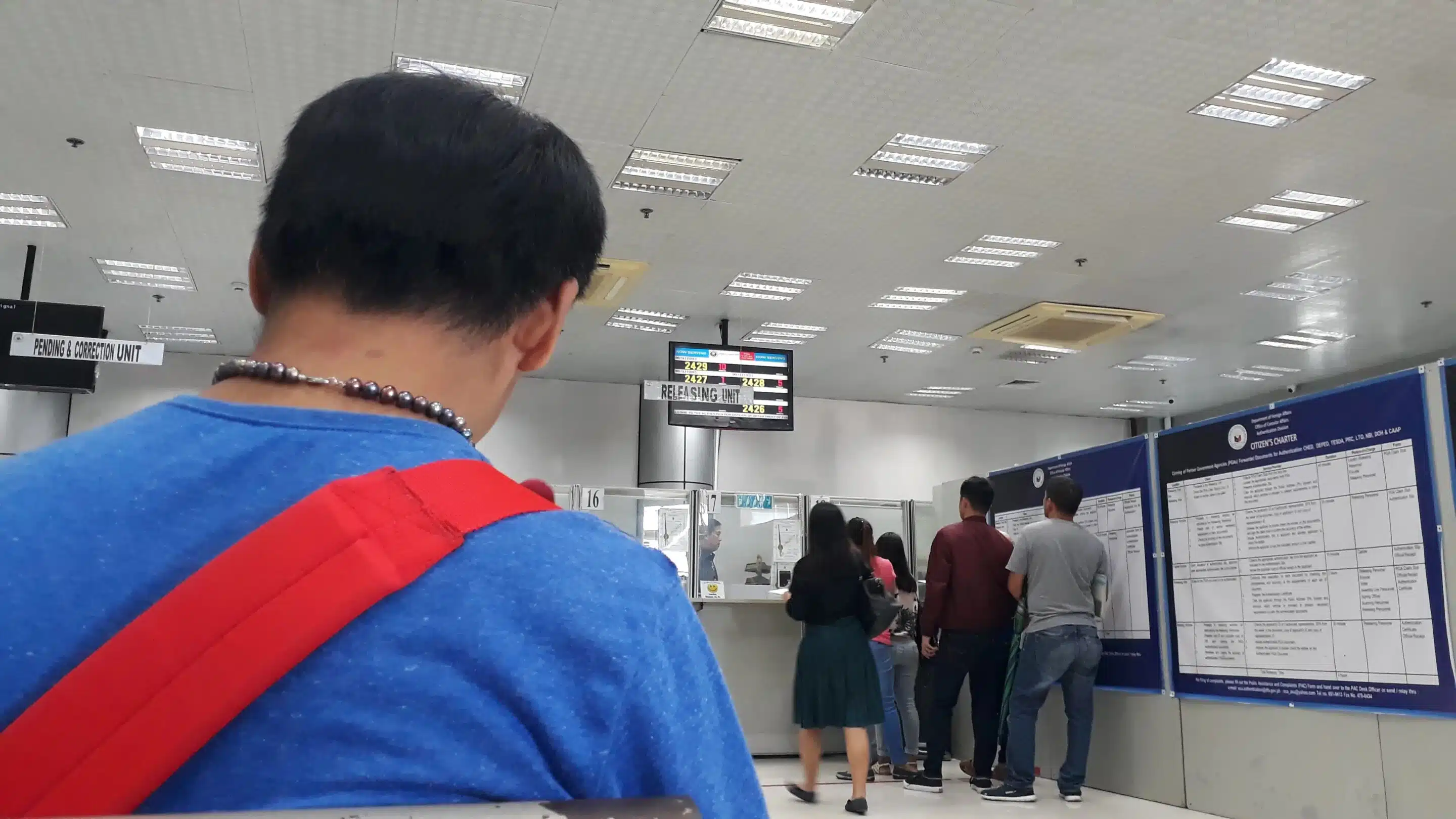
A man waiting for his name to be called in the releasing section to collect his Apostille Birth Certificate
Step 2. Pick up the Apostilled document.
1. Go back to the same Department of Foreign Affairs office on your scheduled date and time. Bring with you your receipt and your ID.
2. Drop your Official Receipt off at the drop box.
3. Wait for your name to be called from the Releasing window (This is all in one big room by the way.)
4. Receive your document and double check to make sure everything is accurate.
I go to the Department of Foreign Affairs Aseana branch myself.
But there are 7 other DFA offices that you can go to for an Apostille.
A lot of them are in malls, so you can even grab a bite along the way!

Always eat before you go to the DFA to avoid starvation if the line is long.
The DFA branches are:-
1. DFA CO-Northeast at Ali Mall Government Center Level 2
2. DFA CO-East on the 7th Floor of Building C in SM Megamall
3. DFA CO-West on the 5th Floor SM City Manila
4. DFA CO-South on the 4th Floor of Alabang Town Center
5. DFA CO Pampanga at Robinson’s Place
6. DFA CO Davao on the 3F SM Davao
7. DFA CO Cebu on the 4th Level of Pacific Mall in Mandaue City Cebu
I have also been to the SM Megamall and the Cubao branch and it’s a fairly standard process.
If you need an official document for use abroad, you probably will need that document Apostilled.
The most common documents I get asked about is how to Apostille Birth Certificate?
(Or how to Apostille Marriage Certificates. Basically, a lot of PSA documents).
You will usually need a document Apostilled for employment or immigration purposes (as well as other uses).
You can still get documents Apostilled if you are living abroad. You will just need to ask a relative to do this for you or engage a courier. Remember though that you will need to give your relative or courier a Special Power of Attorney (SPA) and then have that SPA notarized at a Philippine Embassy first.
This requires you to get an SPA properly prepared. Some SPAs are actually rejected if not properly prepared.
Atty. Francesco C. Britanico, FCB Law Office
Lawyers In the Philippines