Extrajudicial Settlement with Waiver of Rights in the Philippines: Taxes, Process, and Common Traps
Extrajudicial Settlement with Waiver of Rights in the Philippines: Taxes, Process, and Common Traps
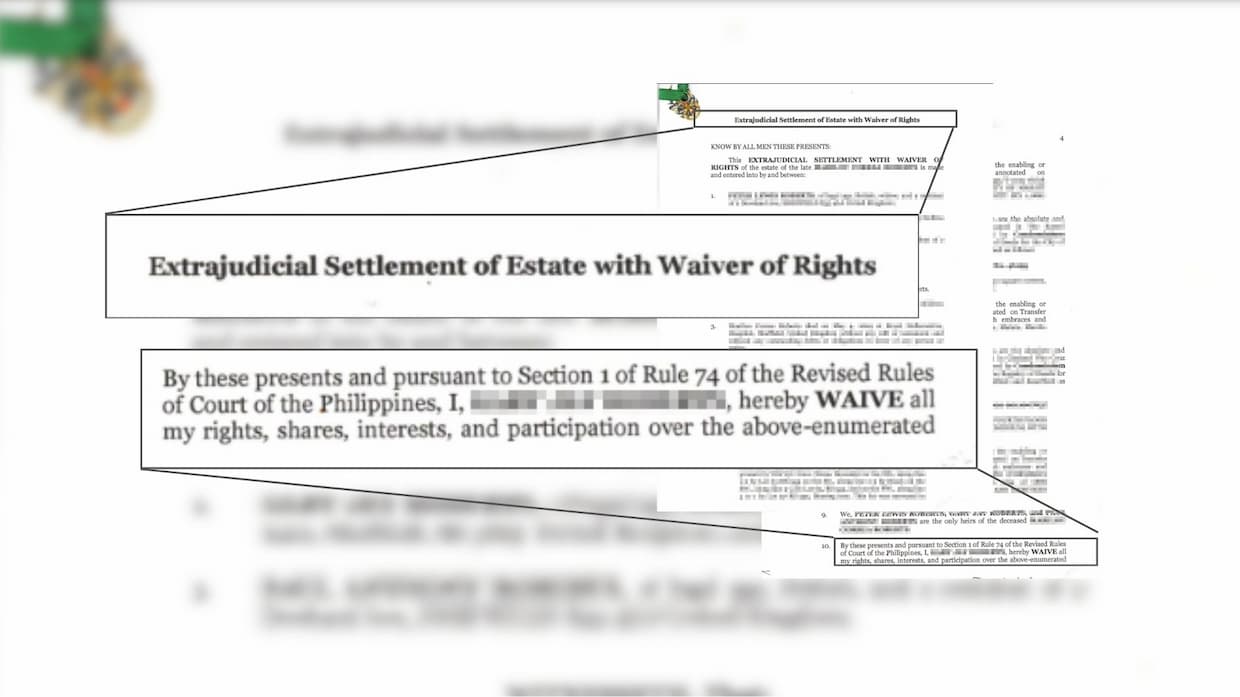

An extrajudicial settlement of estate with a waiver of rights is one of the ways to transfer a Philippine estate to the appropriate heirs, but it can be confusing it may mix inheritance law with tax requirements for donation.
There are so many documents needed, and there is a lot of coordination required among the heirs. One missing title, one wrong spelling, or one heir who refuses to sign can delay the whole transfer for months (and sometimes years).
This guide keeps things clear and practical. It explains the legal basis, the taxes (estate tax and when donor’s tax can appear), the step-by-step process from deed to BIR eCAR to title transfer, and the real-life issues that usually derail families.
- This route works best when all heirs agree and there is no valid will that must be probated.
- A waiver is not automatically “tax-free”; the way the waiver is written and the way properties are allocated can change the tax outcome.
- You cannot settle an estate while the owner is still alive—estate settlement happens after death.
TLDR: An extrajudicial settlement with waiver is an out-of-court deed used after a person dies, where heirs divide the estate and one or more heirs gives up rights. It can be faster than court settlement, but only if the documents and tax steps are handled correctly.
Action: Email admin@lawyerphilippines.org with the death date, list of heirs, and list of properties so we can send you a practical checklist for your situation.

Send us an email with the details for
personalized recommendations or schedule a consulation if needed.
If you want to avoid penalties and avoid redoing documents, you generally do this in five stages: confirm heirs and assets, collect documents, draft and notarize the deed (with a properly worded waiver), file and pay at the BIR until you get the eCAR, then transfer the tax declaration and title at the LGU and Registry of Deeds with proper publication.
- Rule 74 is the core rule for extrajudicial settlement, including publication and a two-year period for certain claims.
- Estate tax is generally computed at 6% of the net estate under current rules; donor’s tax is also generally 6% over the annual exemption of PHP 250,000 for gifts (when it applies).
- Most delays come from missing titles and conflicting names across PSA documents and land records.
TLDR: The safest approach is a staged plan: document gathering first, plan for tax payment prior to submission at the BIR, eCAR next, then Registry and Local Government Unit transfers. If the waiver and allocation are unclear, pause and fix it before anyone signs.
Action: Email admin@lawyerphilippines.org and request a waiver and tax-impact review before notarization, so you don’t waste time and money on a redo.
An extrajudicial settlement of estate is when the heirs do not need the court to determine the distribution of assets because the heirs agree. It is done through a public instrument (a notarized document) and it is grounded on Rule 74 of the Rules of Court.
- Benefit: shorter process because a court case is not required.
- Benefit: usually less cost than a judicial settlement because you avoid many court fees.
- Requirement: the heirs must agree on the distribution and the deed must correctly identify the heirs and properties.
- Important: it cannot be done while the estate owner is still alive.
TLDR: An extrajudicial settlement is an out-of-court deed used when heirs agree on how to divide the estate and when there is no valid will. It must still comply with Rule 74 requirements, including publication.
Action: Write down the complete list of heirs and properties first, then confirm everyone agrees on the distribution before you draft anything.
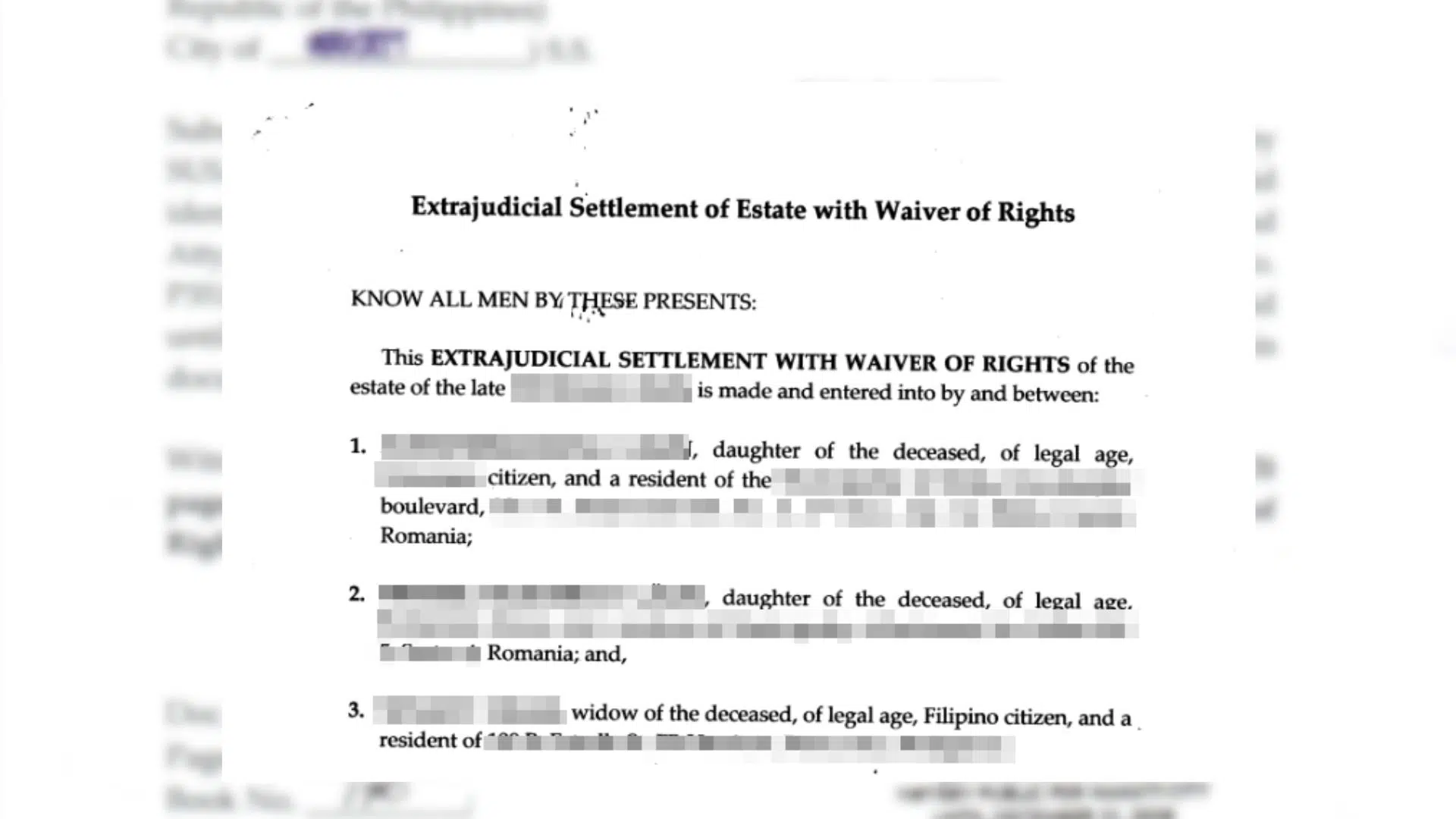 Some heirs formally give up their inheritance in favor of others.
An extrajudicial settlement of estate with waiver of rights is the same out-of-court settlement deed, but it includes one or more heirs waiving all or part of their inheritance rights. Families usually use it when an heir wants to “give up” a share to simplify ownership or to let a specific heir keep a particular property.
- The deed should contain: information of the deceased, identification of all heirs, list of properties, the division of properties, the waiver terms, signatures of all heirs, and proper notarization.
- All heirs generally must agree and sign; if someone is abroad, a proper SPA is usually needed.
- If the waiver is unclear or the property allocation is unequal, donor’s tax issues can appear.
TLDR: An extrajudicial settlement with waiver is a settlement deed where an heir formally gives up all or some inheritance rights. The waiver must be drafted carefully because it can change taxes and future disputes.
Action: Before signing, list who is waiving, what they are waiving, and who benefits from it in plain language.
Court is no longer needed when the decedent left no will, no debts, and all heirs agree on how to divide the estate.
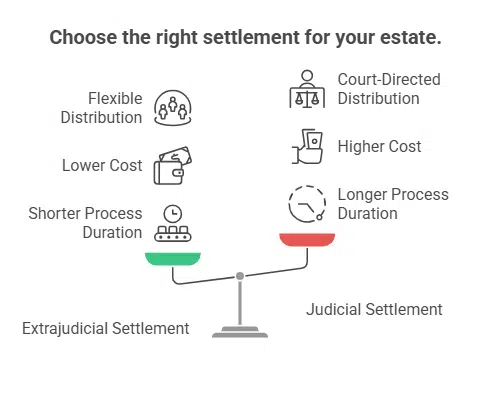
Extrajudicial settlement is usually chosen when there is no valid will and the heirs can agree while a judicial settlement is usually needed when there is a will that must be probated or when heirs are in conflict, because a judge may need to determine how the estate should be settled.
- If there is a will, the general rule is that it must be proved and allowed in court before it can pass property.
- If heirs are quarreling, judicial settlement (or another court case) is often unavoidable.
- Court processes can be longer and more expensive; planning and family agreement can prevent this.
TLDR: You can usually avoid court only when the family situation fits Rule 74 and heirs agree. If a valid will exists or there is serious conflict, a court route is often required.
Action: Confirm first whether a valid will exists and whether any conflict between heirs exists before you start the extrajudicial route.
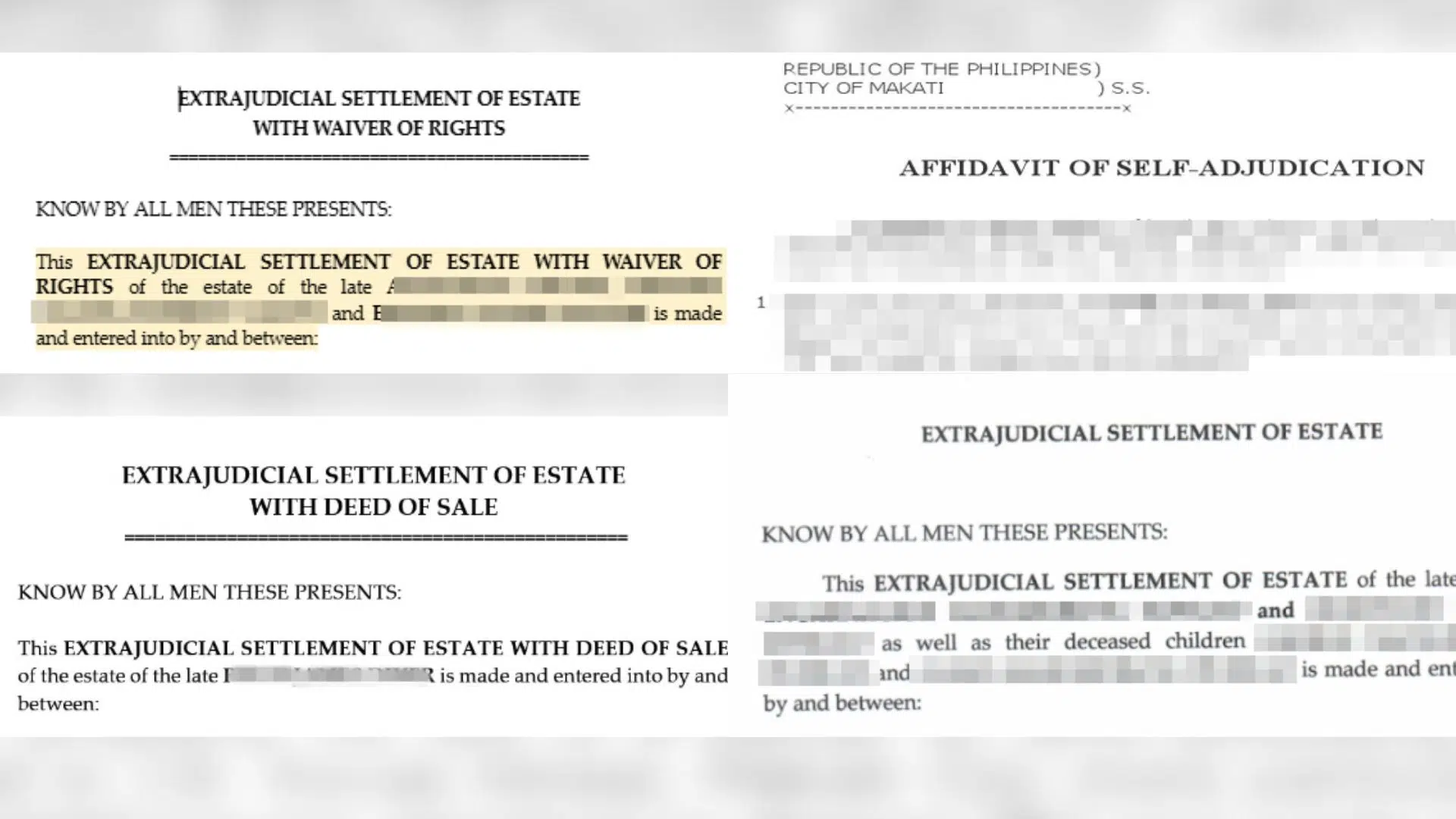
Choosing the right type of estate settlement is important to determine whether the process will be fast, smooth, and less costly.
There are several kinds of estate settlement documents, and the correct one depends on your family situation.
The goal is always the same: identify the deceased, list the heirs and properties, and create a document the BIR and registries will accept.
- Extrajudicial Settlement of Estate: used when there are multiple heirs who agree and want to transfer properties to their names.
- Extrajudicial Settlement of Estate with Deed of Sale: used when the estate is settled and sold at the same time.
- Deed of Sole Adjudication: used when there is only one heir.
- Extrajudicial Settlement of Estate with Waiver: used when an heir waives all or part of their inheritance rights.
TLDR: Different documents exist for different family setups, but they all aim to settle the estate and allow BIR clearance and transfers. Choosing the wrong document can cause rejection and delays.
Action: Match the document type to your family facts before drafting, especially whether there is a sale, a single heir, or a waiver.
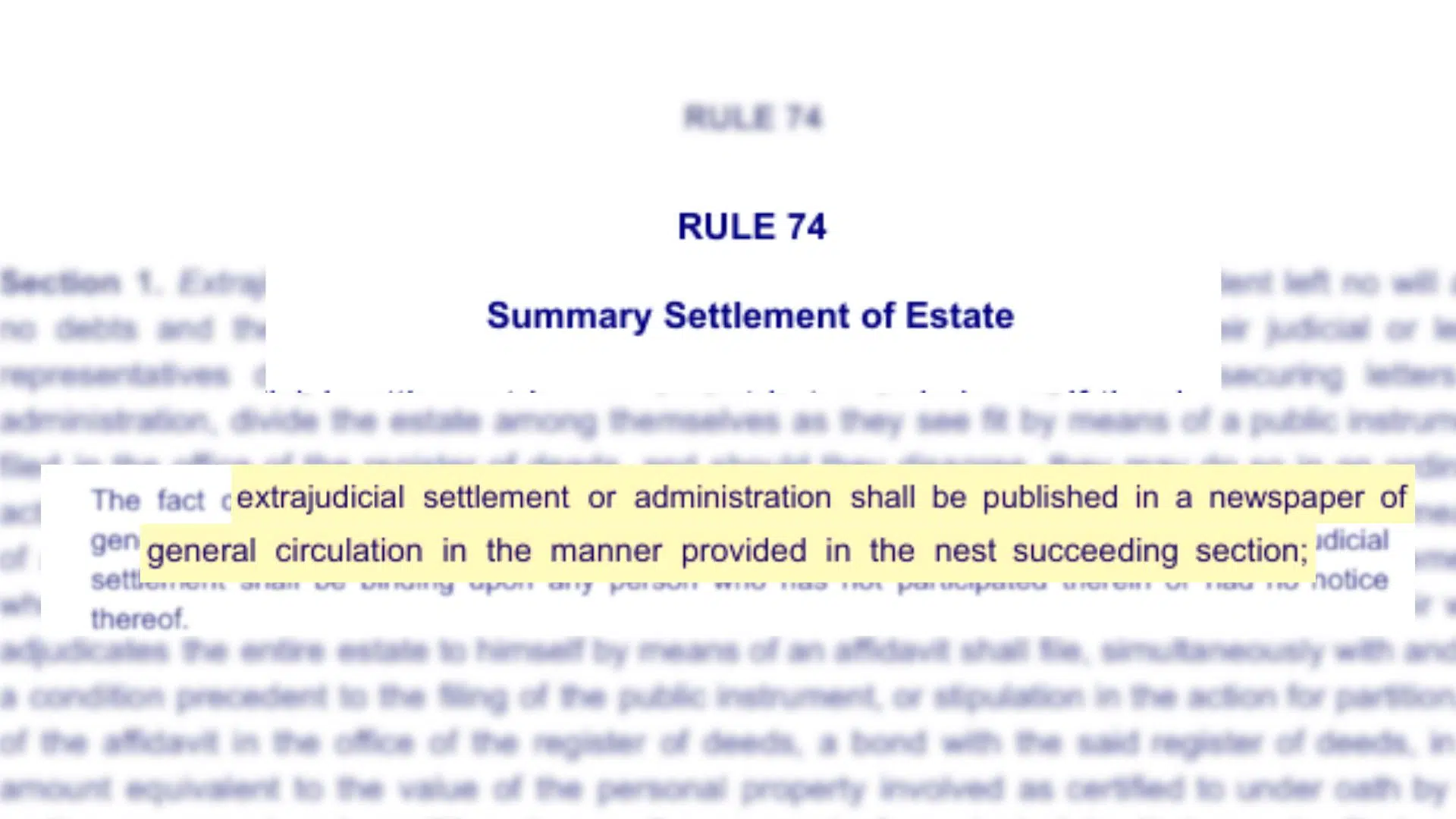
Publication of Extrajudicial Settlement of estate protects heirs, creditors, and future buyers b ensuring the settlement is recognized and enforceable.
The legal basis for an extrajudicial settlement is Rule 74 of the Rules of Court. Rule 74 allows settlement by a public instrument, requires publication once a week for three consecutive weeks, and provides a two-year period where certain claims by excluded heirs or unpaid creditors can still be enforced against the estate and distributees.
- Publication is not just a formality; it is a legal requirement and a common registry requirement for later transfers.
- The two-year period matters in sales and mortgages because titles may carry a Rule 74 annotation and buyers and banks pay attention to it.
- If a valid will exists, Rule 75 generally requires probate before the will can pass property.
TLDR: Rule 74 is the core basis for extrajudicial settlement, including publication and the two-year protection period. Understanding these the legal framework and requirements helps families avoid rejected transfers and future disputes.
Action: Before you publish, make sure the deed is final and error-free and fully complies with all legal requirements to avoid challenge to the distribution later.

Unsettled or faulty estates block sales, incur penalties, spark disputes, and risk legal challenges.
If the estate is not settled, titles and tax declarations stay in the decedent’s name, and families often cannot sell, mortgage, subdivide, or develop the property.
If you settle it incorrectly, you may only discover the problem when a buyer, a bank, the LGU, or the Registry of Deeds rejects your papers, which can force you to redo notarization, publication, and tax filings.
- Late filing and late payment can result in penalties and interest under tax rules.
- Unsettled estates often create long-term family conflict because ownership stays unclear.
- A defective settlement can be challenged, especially if an heir was excluded or coerced.
TLDR: Not settling freezes property transactions and creates legal and tax risk. Settling incorrectly can be just as bad, because fixing errors often costs more than doing it right the first time.
Action: Do a “document sanity check” before filing: names, dates, heirs, and property descriptions must match across your supporting papers to avoid errors.

Ensure all required documents are complete to guarantee a smooth transfer process without delays.
The process usually follows this route: gather documents, draft and notarize the deed, file and pay taxes at the BIR until you receive the eCAR, register the deed and title transfer at the Registry of Deeds and then transfer the tax declaration at the LGU.
- Document gathering of family and property papers.
- Drafting of the extrajudicial settlement with waiver of rights.
- Signing by all heirs (or via SPA), then notarization.
- BIR filing of estate tax return, payment of taxes, and securing the eCAR.
- Publication in a newspaper of general circulation once a week for three consecutive weeks.
- Registry of Deeds registration/annotation and issuance of updated title when applicable.
- LGU transfer of tax declaration and payment of local transfer tax.
TLDR: An extrajudicial settlement with waiver moves from deed to BIR eCAR, then to LGU and Registry transfers. The cleaner your document set is, the faster the route moves.
Action: Create one master checklist, assign one family member as coordinator, and track every receipt and submission.
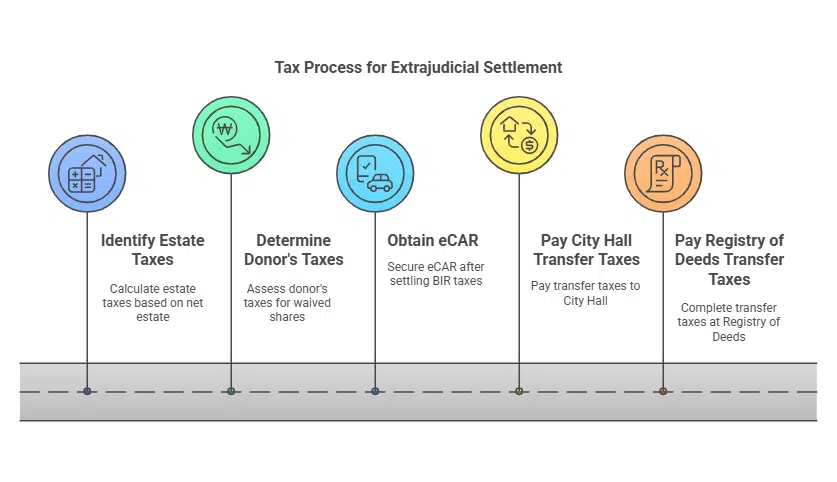
The main taxes are estate tax and, depending on how the waiver works, donor’s tax may apply along with documentary stamp tax. After BIR clearance, you still pay local transfer taxes and registry fees to transfer tax declarations and land titles.
- Estate tax: generally computed at 6% of the net estate under current rules, and the estate tax return is generally due within one (1) year from death.
- Donor’s tax: can apply if a waiver is treated as a donation; donor’s tax is generally 6% on total gifts exceeding PHP 250,000 per calendar year when applicable. Donor’s tax only applies to partial waivers in favor of a specific heir.
- Transfer taxes at City Hall/LGU: paid after BIR issues the eCAR to update the tax declaration and local records; rates vary by LGU but are 0.75% generally.
- Registry of Deeds fees: paid to register the deed and transfer/annotate the title.
TLDR: Expect estate tax as the baseline, plus LGU and Registry fees for transfers. Donor’s tax risk depends on the waiver wording and the value distribution among heirs.
Action: Before anyone signs, compute a rough tax and fees budget so the family can agree on funding and avoid stopping mid-way (which often happens)
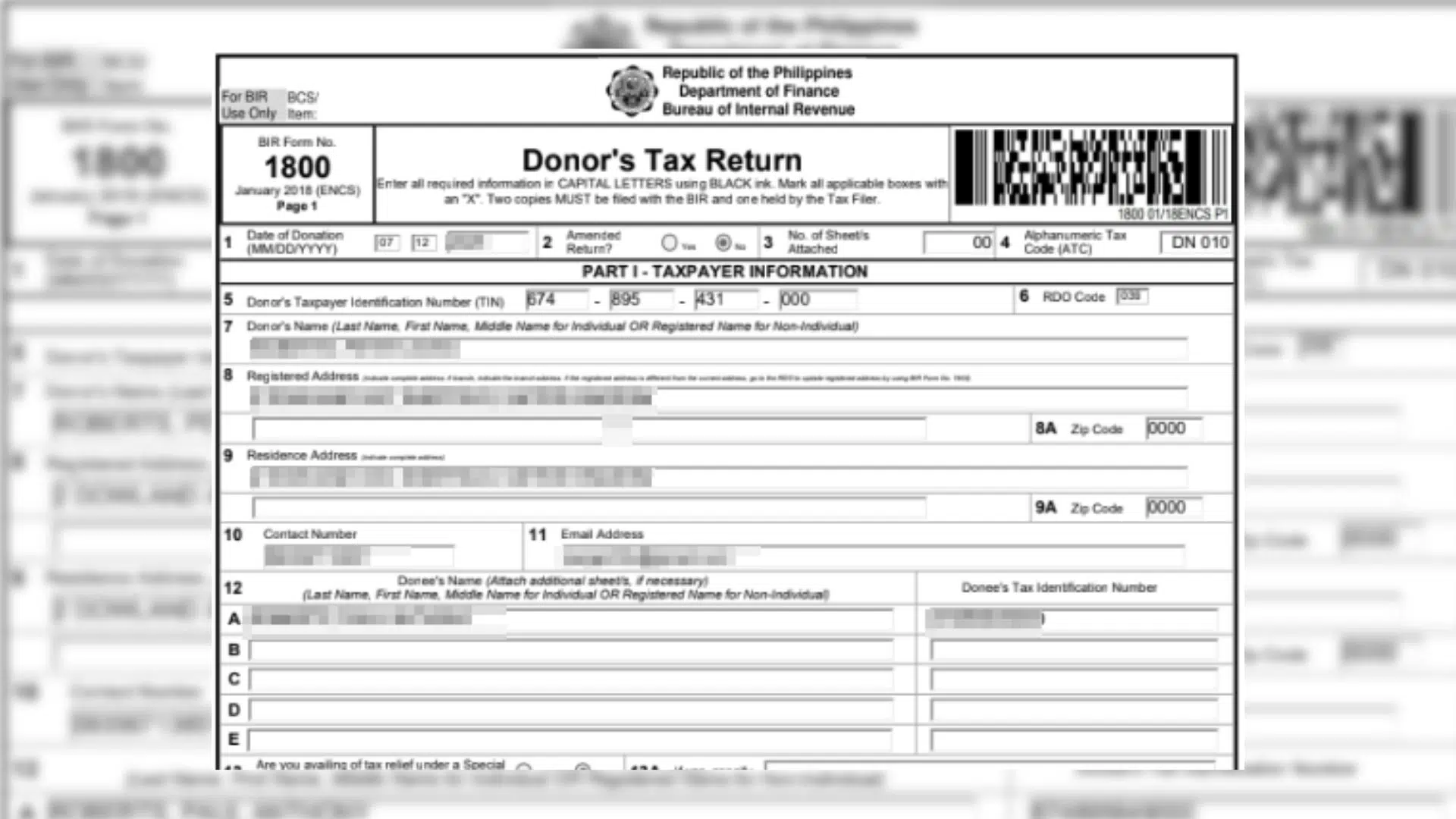
Donor’s tax is 6% imposed by the BIR.
In practice, whether donor’s tax applies depends on how the waiver is structured and whether it is a general renunciation or a waiver in favor of a specific person.
If the waiver is drafted or implemented in a way that clearly benefits a particular heir beyond their share, the BIR may treat it like a donation and assess donor’s tax.
- A waiver “in favor of” a specific heir tends to attract more scrutiny than a general renunciation.
- Unequal allocations of identified properties can create donor’s tax exposure if value is clearly given up by one heir and received by another.
- If money or any consideration is exchanged for the waiver, the tax treatment can change and may require a different structure or additional documentation.
TLDR: Donor’s tax risk is a drafting and valuation issue: the more specific and value-shifting the waiver is, the higher the risk it is treated as a donation.
Action: Ask for a simple value comparison per heir (rightful share vs received assets) before you finalize the deed’s allocation section.
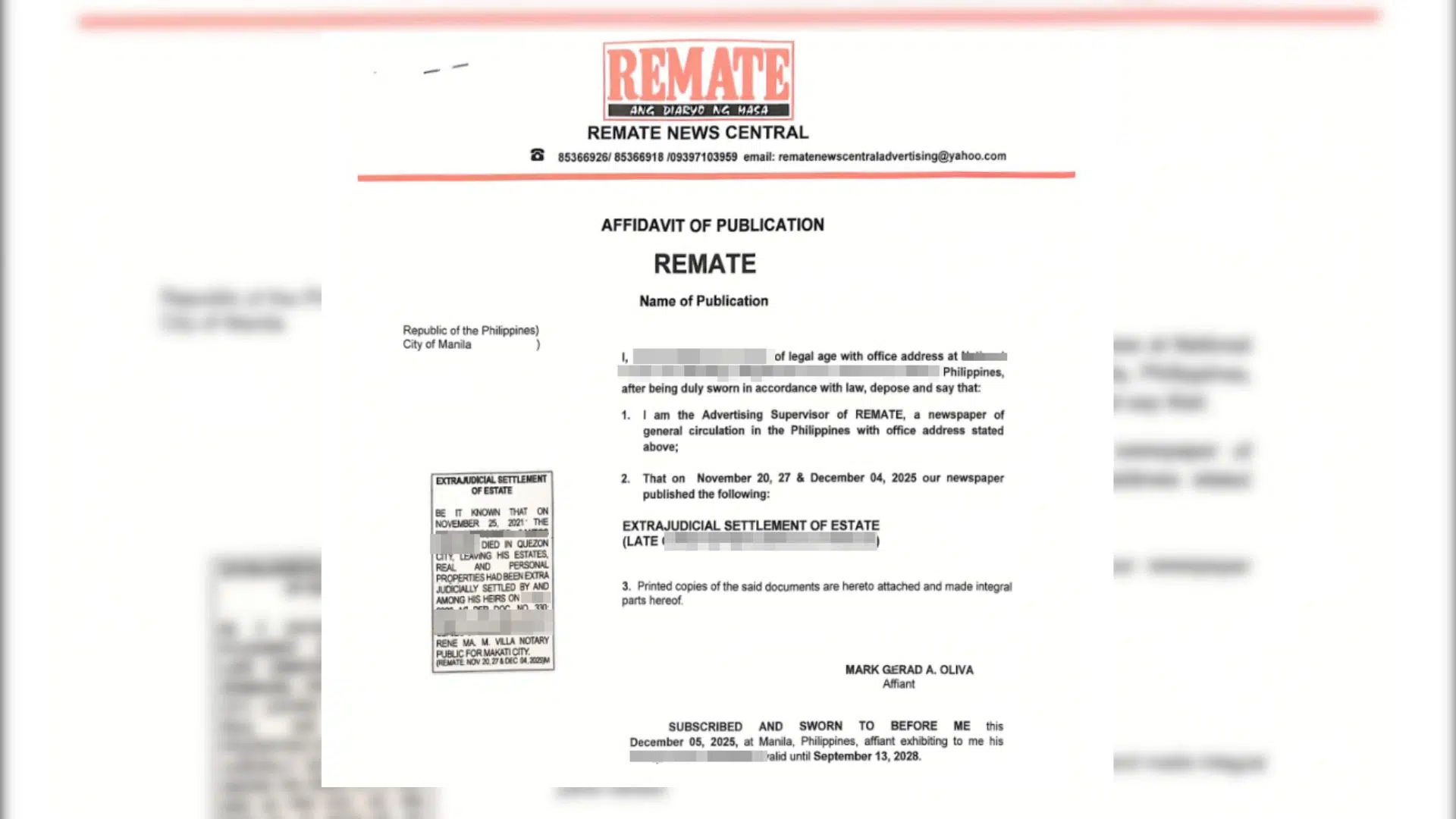
Publication is crucial to informs creditors and the public about the estate division, prevent fraud, and ensures transparency before heirs legally receive their shares.
The process usually follows this route: gather documents, draft and notarize the deed, file and pay taxes at the BIR until you receive the eCAR, register the deed and title transfer at the Registry of Deeds and then transfer the tax declaration at the LGU.
- Document gathering of family and property papers.
- Drafting of the extrajudicial settlement with waiver of rights.
- Signing by all heirs (or via SPA), then notarization.
- BIR filing of estate tax return, payment of taxes, and securing the eCAR.
- Publication in a newspaper of general circulation once a week for three consecutive weeks.
- Registry of Deeds registration/annotation and issuance of updated title when applicable.
- LGU transfer of tax declaration and payment of local transfer tax.
TLDR: An extrajudicial settlement with waiver moves from deed to BIR eCAR, then to LGU and Registry transfers. The cleaner your document set is, the faster the route moves.
Action: Create one master checklist, assign one family member as coordinator, and track every receipt and submission.
 Strict offices reject even minor documents errors, missing originals, or unresolved discrepancies.
The most common reasons families get stuck are document errors and missing originals: misspelled names on PSA certificates vs titles, tax declarations not transferred to the decedent, missing owner’s duplicate titles, and property descriptions that do not match across documents.
Government offices are strict, and even small inconsistencies can trigger rejection.
- Name errors: fix or explain discrepancies before filing; do not assume “it’s close enough.”
- Missing titles: a lost owner’s duplicate title often requires a proper legal remedy before registration is possible.
- Tax declaration issues: reconcile local records early, especially if the decedent is not the declared owner. This will require proof of transfer to the decedent and can be laborious to fix and do.
- Missing family documents: Difficult to collect PSA records – especially when the persons involved are fairly old can be very, very difficult to fix.
TLDR: Most delays are not “legal theory” problems—they are evidence problems. Fixing name and document inconsistencies and completing all documentary requirements early can save months of back-and-forth.
Action: Do a single-page mismatch list (names, dates, property numbers) and solve each mismatch before you spend on publication and filing. Additionally, make sure that you have complete documents.
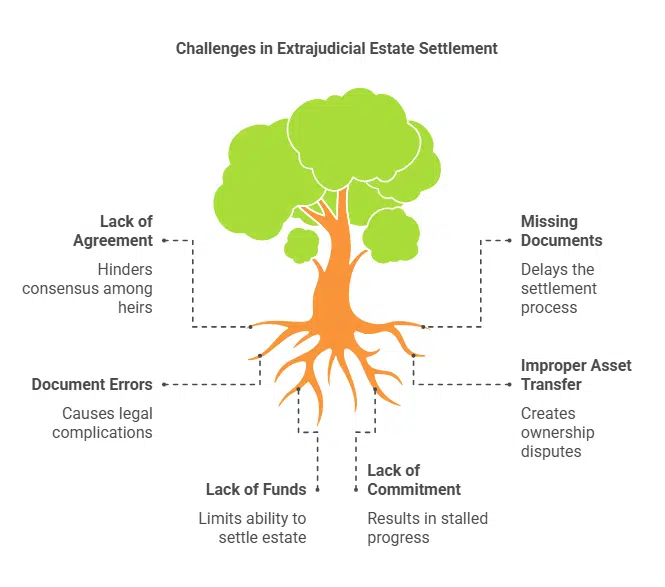
Real-life challenges often prevent estates from being settled immediately.
Common reasons include lack of agreement between heirs, missing documents (especially the owner’s duplicate title), documents with severe errors, improperly transferred assets from earlier transactions, lack of funds, and lack of commitment to finish the manual steps.
- Agreement first: if heirs disagree, the deed cannot move forward.
- Missing originals: prioritize hard-to-replace documents early (titles and PSA documents).
- Funding plan: allocate a tax budget and a separate budget for document repairs and extra requirements.
- Coordination: one point person with weekly deadlines often makes the difference.
TLDR: Most families get stuck because of coordination and missing documents, not because the law is impossible. A clear plan and a complete document set is the practical workaround.
Action: Hold a family meeting, assign roles, and set a document deadline before you spend on taxes and publication.

Families should remember that selling inherited properties needs heir’s consent, debt settlement, EJS publication, and legal proof.
Philippine court disputes about estate property often start with informal “family arrangements” that were never properly documented and registered.
The consistent lesson is simple: clean paperwork and proper registration matters, because buyers, banks, and even family members will rely on the title and recorded documents years later.
- Treat the waiver and settlement deed as a permanent record, not a temporary family compromise.
- Do not exclude heirs or rush signatures, because excluded heirs often trigger lawsuits later.
- If you plan to sell, understand the two-year Rule 74 framework and title annotations that may affect buyer confidence.
TLDR: Courts repeatedly show that sloppy estate paperwork creates long, expensive disputes. The safest path is accurate documents, complete heir identification, and proper registration before transactions.
Action: Before accepting a buyer, confirm title status and annotations, and make sure your deed and BIR clearances are already in order.